
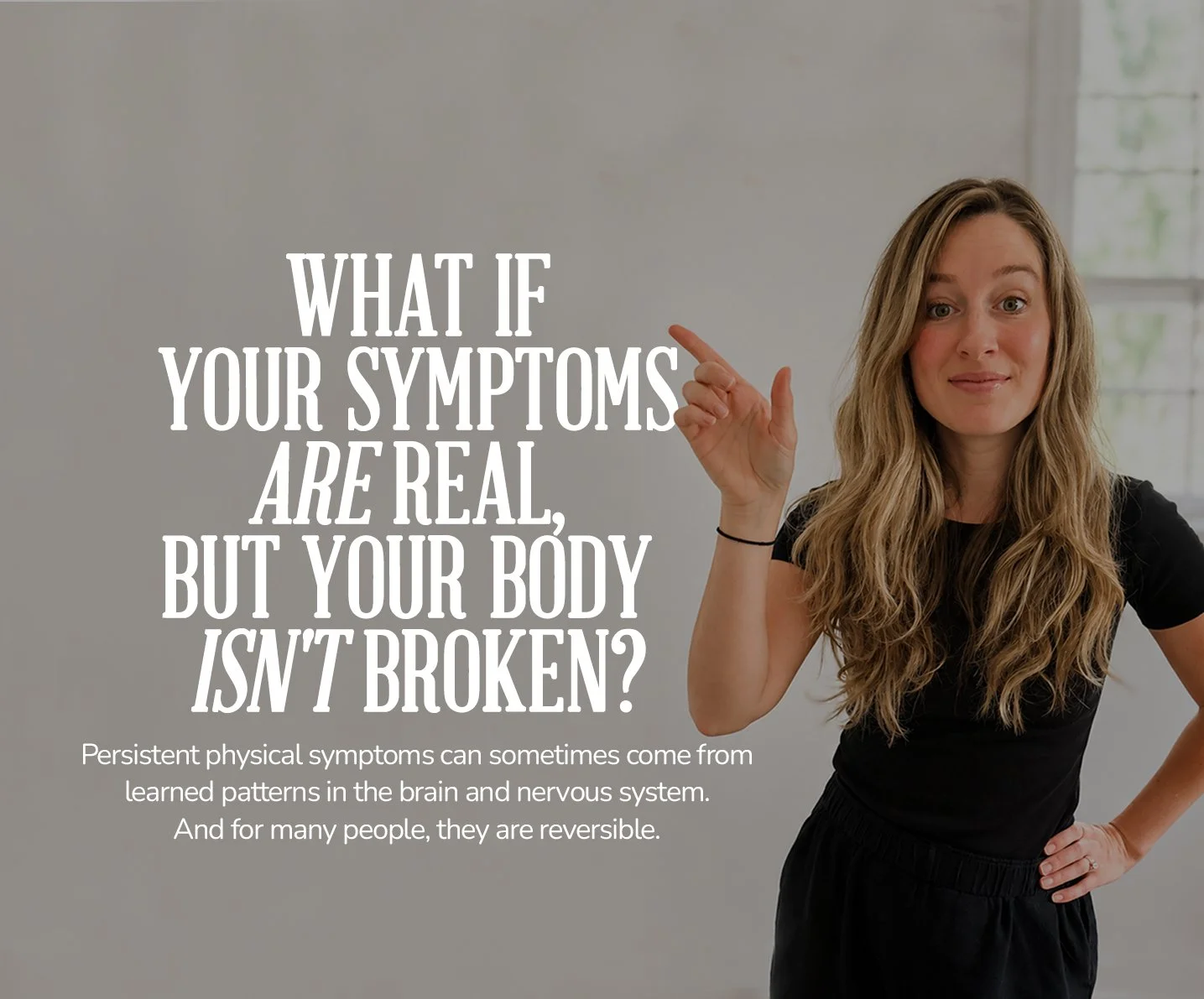
You’ve tried to fix the symptom. But what if the symptom isn’t the problem?
Maybe you’ve seen doctor after doctor, tried medications, physical therapy, diets, supplements, procedures, or other treatments—and you’re still left wondering why your symptoms won’t go away.
Maybe your testing looks normal. Or maybe it doesn’t—but your diagnosis still doesn’t seem to explain why your symptoms are so intense, unpredictable, or persistent.
You may notice that your symptoms:
come and go without a clear reason
move, change, or fluctuate
worsen during stressful seasons
began after an injury, illness, surgery, or difficult life event
improve when you’re distracted, relaxed, or away from your usual routine
have made you increasingly afraid of certain foods, movements, sensations, or activities
continue despite repeated treatment or adequate healing
If any of this sounds familiar, your brain and nervous system may be playing a larger role than you realize.
Did you know that although pain is felt in your body,
it's actually created and maintained by your brain?
How can the brain create physical symptoms?
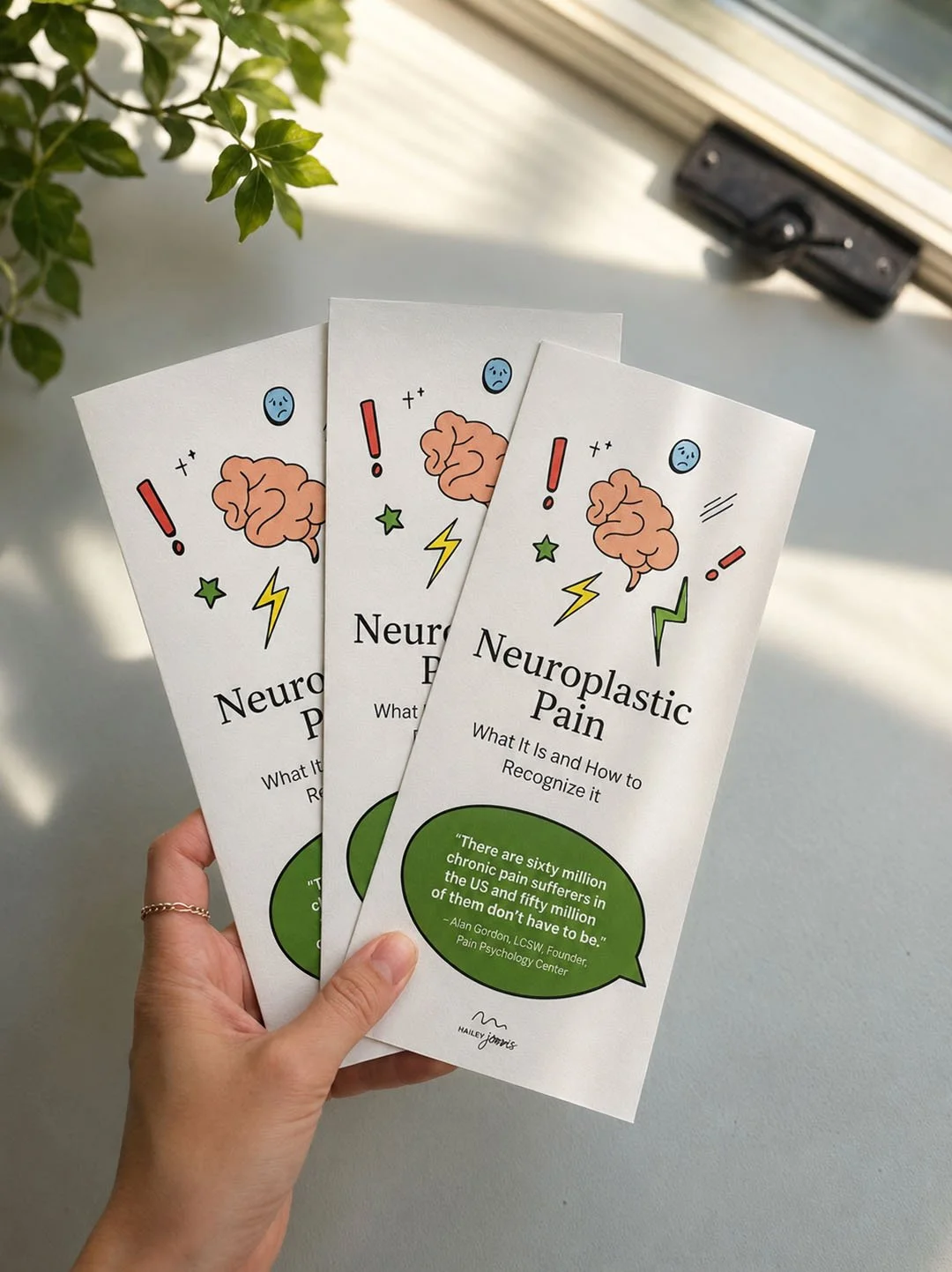
Neuroplastic pain is real pain that is generated or maintained by learned pathways in the brain and nervous system.
Sometimes this happens after an injury or illness has healed. Other times, there may still be very real findings on imaging, testing, or lab work—but those findings may not fully explain the severity, persistence, or pattern of symptoms someone is experiencing.
A physical finding and the cause of symptoms are not necessarily the same thing.
The brain can learn pain. After injury, illness, stress, or prolonged fear around symptoms, the nervous system can become increasingly sensitive to perceived danger and continue producing pain even when the body is safe.
Think of it like a smoke alarm that becomes overly sensitive and goes off when you’re making toast. The alarm isn’t fake—it’s simply responding as though there is danger when there isn’t.
Pain is one of the brain’s protective responses to perceived threat. But the brain’s danger system responds to more than physical damage.
Stress, fear, past experiences, emotions, beliefs, and expectations can all influence how the brain interprets what is happening in the body—and whether it produces pain.
Structural or medical causes should always be appropriately evaluated and treated. At the same time, research suggests that neuroplastic processes can play a significant role in many chronic conditions, including back and neck pain, IBS, headaches and migraines, chronic abdominal pain, and pelvic pain.
This does not mean the pain is imagined or “all in your head.” Pain is a real experience produced by the brain in response to perceived danger.
And these learned pathways aren’t limited to pain. Similar brain and nervous system processes can contribute to symptoms such as GI distress, fatigue, insomnia, dizziness, headaches, skin symptoms, and more.
Anxiety • depression • PTSD • OCD + eating disorders • Misophonia • Panic attacks • Protracted withdrawal syndrome • Headache or migraine • Fibromyalgia • Chronic fatigue • Irritable Bowel Syndrome • Back or sciatic pain • Vertigo or dizziness • Pelvic pain • Visual abnormalities • Ehlers-Danlos syndrome • Complex regional pain syndrome • Chronic lyme disease • Functional neurologic disorder • Interstitial cystitis • Long covid • Unexplained pain or illness • Chronic heartburn or GERD • Cyclic vomiting syndrome • Functional abdominal pain • Functional dyspepsia • Irritable bowel syndrome • Chronic prostatitis • Dyspareunia • Frequent urination • Pelvic congestion syndrome • Pelvic floor dysfunction • Persistent genital arousal disorder • Pudendal neuralgia • Rectal muscle spasm/rectal pain • Sexual dysfunction • Vulvodynia • Inappropriate sinus tachycardia • Non-cardiac chest pain • POTS Postural orthostatic tachycardia syndrome • Raynaud’s phenomena • Chronic eczema, hives, or itching • Hyperhydrosis • Telogen effluvium • Insomnia • Hypersensitivity to touch, sound, smell, light, foods or medications • Multiple chemical sensitivity • Benign Tremor • Brain fog, memory difficulties • Computer vision syndrome • Dystonias • Mal de Debarquement syndrome • Non-epileptic or functional seizure disorder • Occipital neuralgia • Persistent postural perceptual dizziness • Post concussion syndrome • Post-herpetic neuralgia • Raynaud’s phenomena • Restless leg syndrome • Small fiber neuropathy • Spasmodic dysphonia • Stuttering • Tics • Trigeminal neuralgia • Visual snow syndrome • Burning mouth syndrome • Choking sensation/“lump in throat” • Chronic cough • Chronic tooth or gum pain • Laryngopharyngeal reflux • TMJ OR TMD • Tinnitus • Amplified musculoskeletal pain syndrome • Chronic joint pain • Chronic neck pain • Chronic tendonitis • Erythromelalgia • Foot pain syndrome • Morton’s neuroma • Myofascial pain syndrome • Paresthesias • Piriformis syndrome • Plantar fasciitis • Post-surgical incision pain • Repetitive strain injury • Thoracic outlet syndrome • Torticollis Whiplash • Winged scapula syndrome • Adrenal fatigue syndrome • Candida overgrowth syndrome • Dysbiosis/dysbacteriosis • EBV reactivation syndrome • Leaky gut syndrome • Mast cell activation syndrome • Hypersensitivity syndromes • SIBO: Small intestine bacterial overgrowth syndrome •
Anxiety • depression • PTSD • OCD + eating disorders • Misophonia • Panic attacks • Protracted withdrawal syndrome • Headache or migraine • Fibromyalgia • Chronic fatigue • Irritable Bowel Syndrome • Back or sciatic pain • Vertigo or dizziness • Pelvic pain • Visual abnormalities • Ehlers-Danlos syndrome • Complex regional pain syndrome • Chronic lyme disease • Functional neurologic disorder • Interstitial cystitis • Long covid • Unexplained pain or illness • Chronic heartburn or GERD • Cyclic vomiting syndrome • Functional abdominal pain • Functional dyspepsia • Irritable bowel syndrome • Chronic prostatitis • Dyspareunia • Frequent urination • Pelvic congestion syndrome • Pelvic floor dysfunction • Persistent genital arousal disorder • Pudendal neuralgia • Rectal muscle spasm/rectal pain • Sexual dysfunction • Vulvodynia • Inappropriate sinus tachycardia • Non-cardiac chest pain • POTS Postural orthostatic tachycardia syndrome • Raynaud’s phenomena • Chronic eczema, hives, or itching • Hyperhydrosis • Telogen effluvium • Insomnia • Hypersensitivity to touch, sound, smell, light, foods or medications • Multiple chemical sensitivity • Benign Tremor • Brain fog, memory difficulties • Computer vision syndrome • Dystonias • Mal de Debarquement syndrome • Non-epileptic or functional seizure disorder • Occipital neuralgia • Persistent postural perceptual dizziness • Post concussion syndrome • Post-herpetic neuralgia • Raynaud’s phenomena • Restless leg syndrome • Small fiber neuropathy • Spasmodic dysphonia • Stuttering • Tics • Trigeminal neuralgia • Visual snow syndrome • Burning mouth syndrome • Choking sensation/“lump in throat” • Chronic cough • Chronic tooth or gum pain • Laryngopharyngeal reflux • TMJ OR TMD • Tinnitus • Amplified musculoskeletal pain syndrome • Chronic joint pain • Chronic neck pain • Chronic tendonitis • Erythromelalgia • Foot pain syndrome • Morton’s neuroma • Myofascial pain syndrome • Paresthesias • Piriformis syndrome • Plantar fasciitis • Post-surgical incision pain • Repetitive strain injury • Thoracic outlet syndrome • Torticollis Whiplash • Winged scapula syndrome • Adrenal fatigue syndrome • Candida overgrowth syndrome • Dysbiosis/dysbacteriosis • EBV reactivation syndrome • Leaky gut syndrome • Mast cell activation syndrome • Hypersensitivity syndromes • SIBO: Small intestine bacterial overgrowth syndrome •
Mind-body symptoms can show up almost anywhere in the body.
Could Your Pain Be Structural?
Sometimes pain is a sign of something happening in the body that needs medical attention. A fracture, acute infection, tumor, cancer, or other serious medical condition can cause pain and should be appropriately evaluated and treated.
But once serious or urgent causes have been ruled out, the presence of an MRI finding, abnormal test, or diagnosis does not automatically tell us what is causing persistent pain.
In fact, many structural findings are common in people with and without pain. This is where the distinction between having a physical finding and identifying the cause of symptoms becomes important.
So yes—structural pain exists. But an abnormal finding alone doesn't prove that your symptoms are structural.
Why Do Many People Struggle to See Their Own Neuroplastic Symptoms? →
“But My Case
Is Different—”
Maybe it's a MRI, an abnormal lab, a positive SIBO test, a Lyme test, arthritis on an X-ray, a bulging disc, or another finding that seems to perfectly explain your symptoms. Surely your case is different, right?
An abnormal MRI, lab result, or other positive test does not necessarily mean that finding is the cause of your symptoms—many of the same findings are also present in people who have no symptoms at all. Check out the study below of spinal degeneration found in people with no pain.
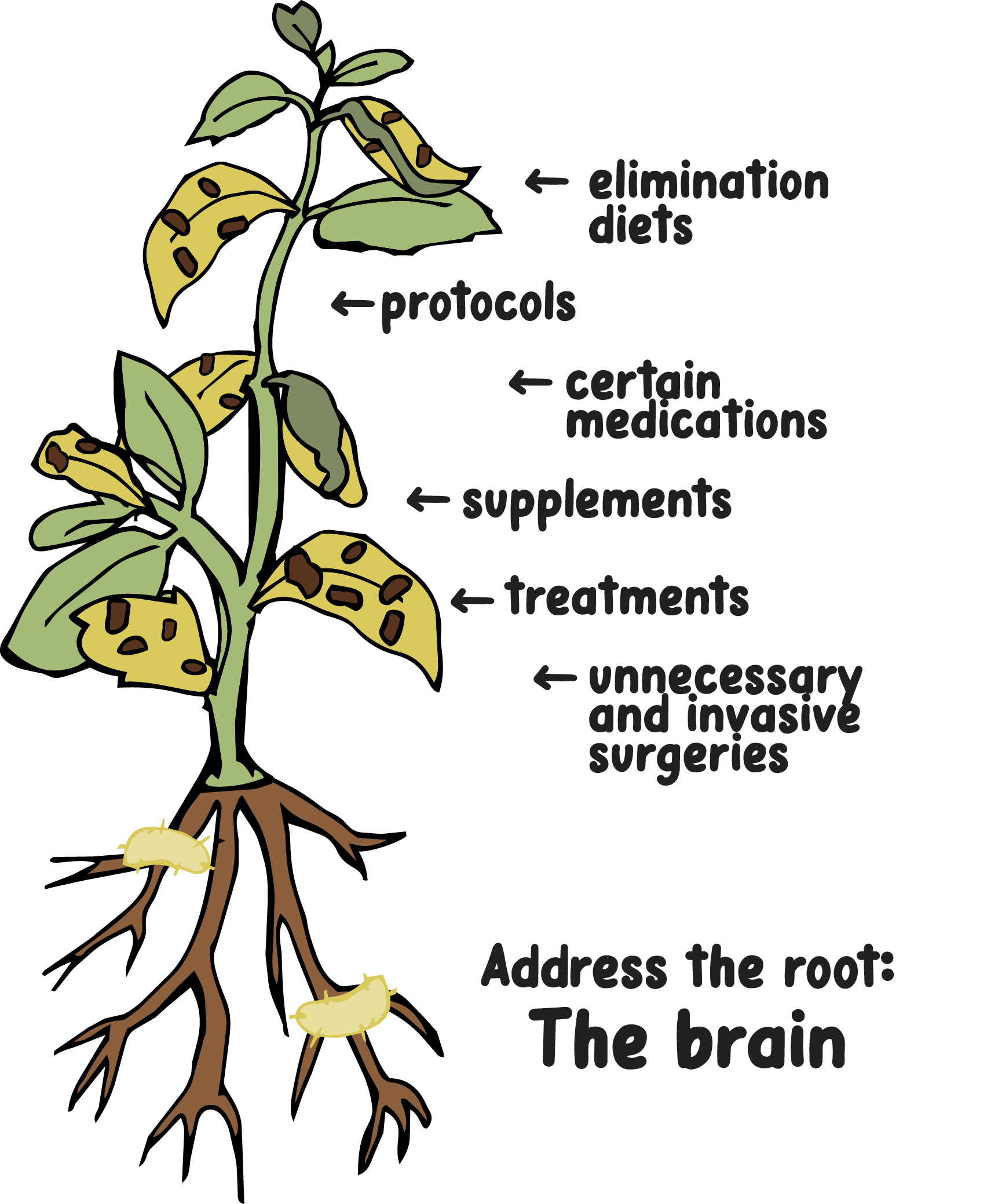
Address the root: the brain
When symptoms are neuroplastic, treating the body alone may not create lasting relief.
Think of a plant with unhealthy roots: you can trim the leaves and treat the branches, but if the root system is struggling, the plant won’t fully thrive.
The brain can learn pain and other symptoms—but because of neuroplasticity, it can also learn safety.
Treatment focuses on changing the learned brain and nervous system patterns that may be keeping symptoms going.

Hi, I’m Hailey
I’m a licensed therapist who specializes in the intersection of emotional health, the brain, nervous system, and persistent physical symptoms. I use evidence-based approaches including Pain Reprocessing Therapy and Emotional Awareness and Expression Therapy to help clients understand their symptoms differently—and begin changing the patterns that may be keeping them stuck.
Your symptoms are real. And for many people, they are also reversible.
Wondering if this approach could fit your symptoms?
You don’t have to know for certain that your symptoms are neuroplastic before reaching out. We can talk through what you’ve experienced, what you’ve already tried, and whether this kind of work may be appropriate for you.