

Neuroplastic Pain
What It Is, How It Happens and How To Determine If You Have It
The information below explains how chronic neuroplastic symptoms develop—and why evidence-based brain retraining treatments can help you heal.
Neuroplastic pain is real physical pain or symptoms that are generated or maintained by learned pathways in the brain and nervous system.
Sometimes these pathways develop after an injury or illness and continue even after the body has healed. Other times, there may still be very real findings on imaging, testing, or lab work—but those findings may not fully explain the severity, persistence, or pattern of symptoms. A physical finding and the cause of symptoms are not necessarily the same thing.
Although pain is felt in your body, it's actually created by your brain.
Your body's nerves can send warning signals that something might need attention (called nociception), but those signals aren’t pain. It's your brain that interprets those messages and decides whether pain is needed to protect you.
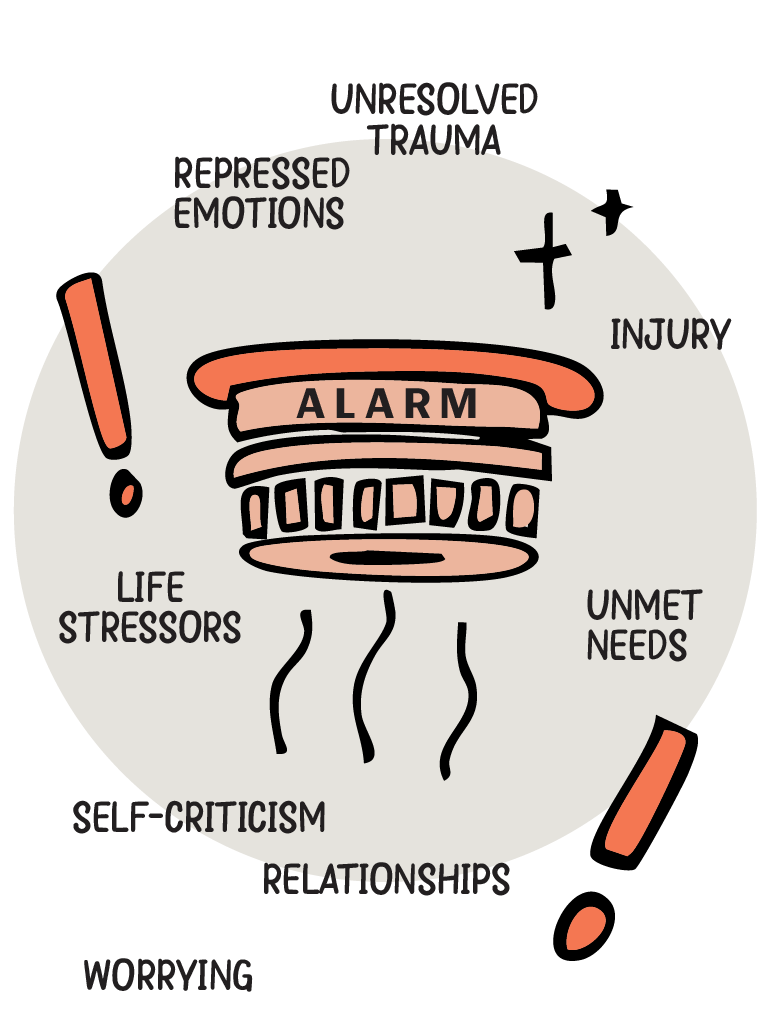
Pain is
communication.
Our brains produce pain to protect us from real or perceived threats. When there is an injury or disease, pain serves an essential purpose by alerting us to danger and helping us protect the body while it heals. Think of pain like a smoke alarm—when there's a real fire, you want it to sound. But sometimes smoke alarms become overly sensitive, going off when you burn toast instead of when the house is on fire. In the same way, the brain's danger alarm can become overprotective, producing very real pain even after tissues have healed or when no physical damage is present.
While we often think of threats as being physical, the brain also responds to emotional and psychological threats—many of which operate outside of our conscious awareness. Experiences such as rejection, conflict, grief, shame, or chronic stress can activate the same protective alarm system and, in some people, lead to physical symptoms.¹ In fact, researchers have found that emotional and physical pain activate many of the same brain regions.
In one study, participants underwent fMRI scans while experiencing physical pain and while viewing photos of a recent ex-partner who had rejected them. Both experiences activated overlapping neural networks, demonstrating that the brain processes emotional pain in ways that closely resemble physical pain.²
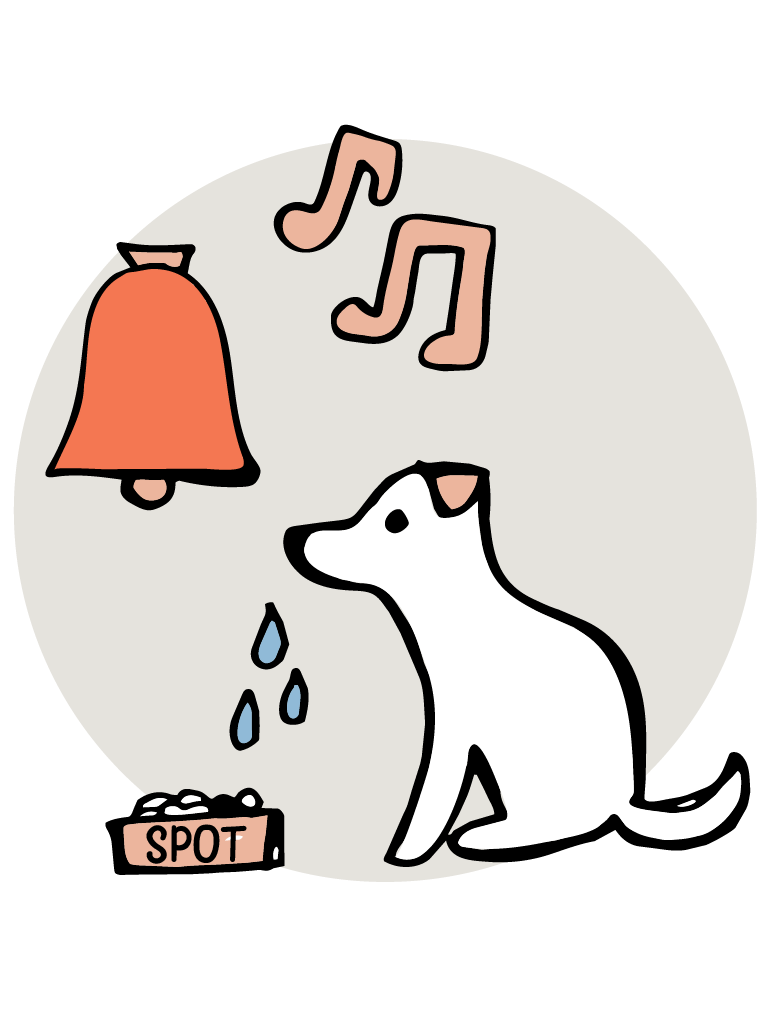
The brain can
learn pain by
creating conditioned responses.
Just as Pavlov's dogs learned to associate the sound of a bell with food, our brains can learn associations between certain situations and pain. These learned connections are meant to protect us—but sometimes they become inaccurate.
Imagine waking up one morning with a sore neck or back. Your first thought might be, "Why am I in pain?" You might blame your pillow, your mattress, what you did yesterday, or the way you slept. In an effort to fix the problem, you buy a new pillow, research mattresses, get an adjustment, schedule a massage, etc. Be aware your brain might create a conditioned response to what you perceive to be the stimulus.
If the pain persists, you might schedule an MRI. It’s always good to rule out a structural cause for pain, however, it’s unlikely there is a structural cause. Check out this wild study below:
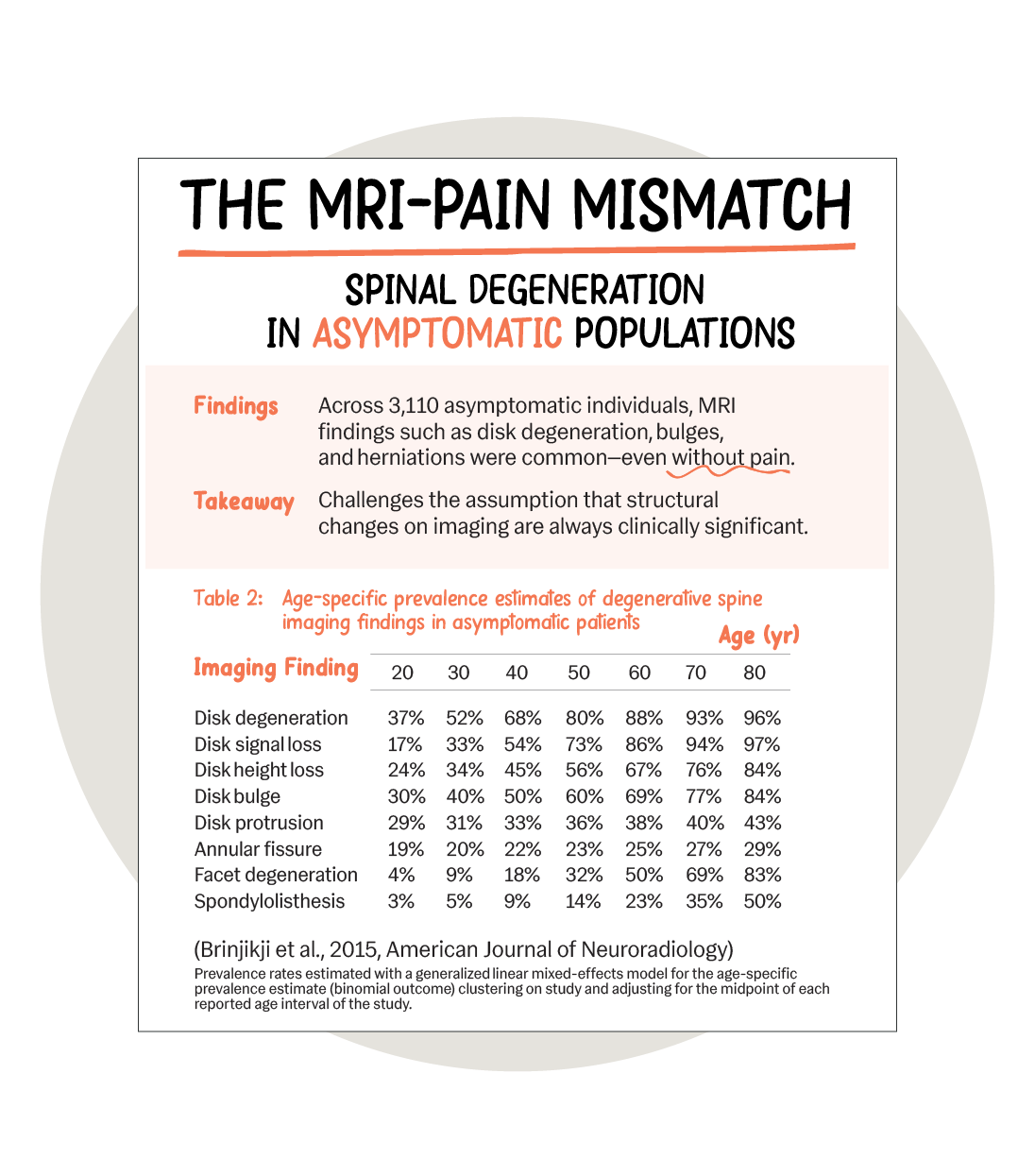
MRI findings are often incongruent with the presence or severity
of pain.
In a review of over 3,000 pain-free individuals, researchers found that age-related changes such as disc degeneration, bulges, and even herniations were remarkably common despite the absence of pain. These findings remind us that structural changes on an MRI do not necessarily indicate the source of a person's symptoms.³
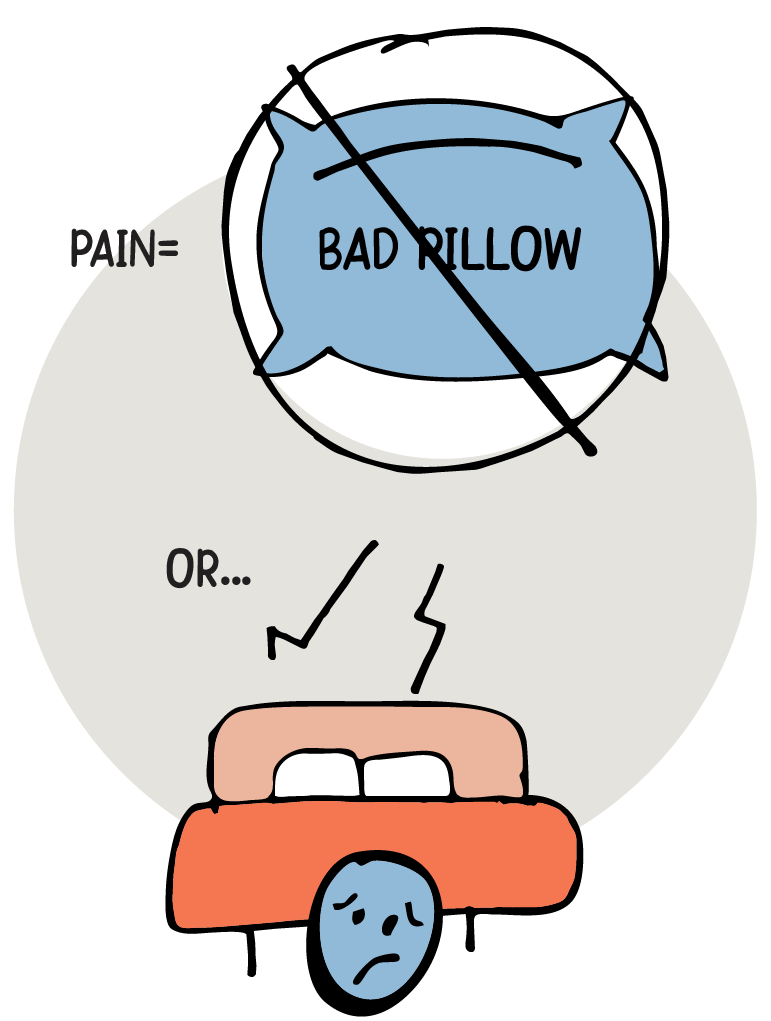
Your brain might be sounding a false alarm.
So, what if your pain isn't coming from where you think? What if it developed before a significant event, during a stressful week at work, or after a difficult conversation or emotionally charged experience? If your brain has learned to associate stress with danger, it may begin producing pain as a protective response—even when your body is structurally sound.
The amount of pain you feel is not a direct measure of the health of your body. It's a measure of how much danger your brain senses.⁴˒⁵
How the brain learns pain
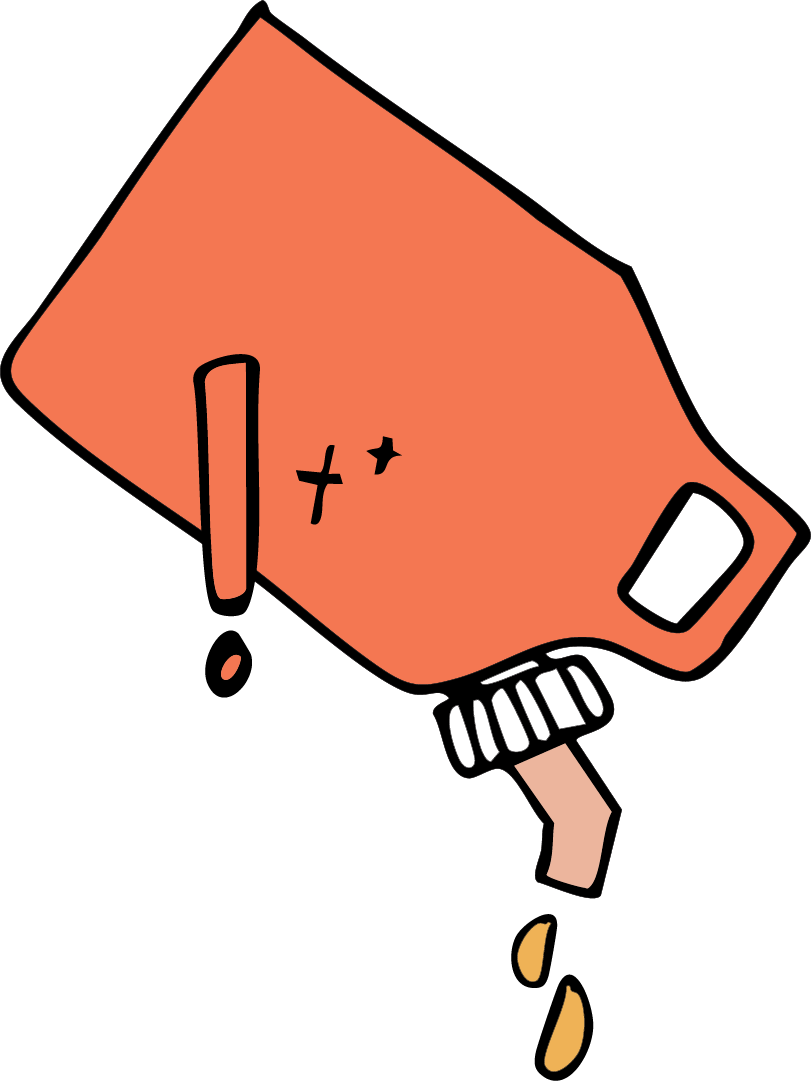
What reinforces symptoms? Fear of symptoms.
Since our brains give us pain to communicate something important and is possibly dangerous is happening, a negative feedback loop can form when we fear the symptoms the brain creates.
More fear=more pain. More pain=more fear.
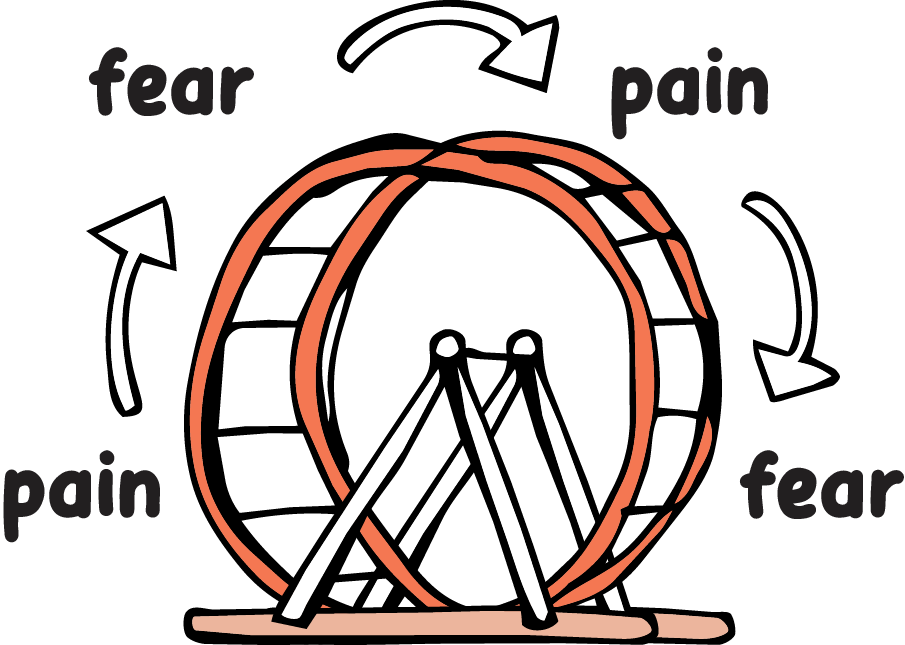
Factors that strengthen fear pathways, increase nervous system sensitivity, and lead the brain to produce more pain as a protective response.
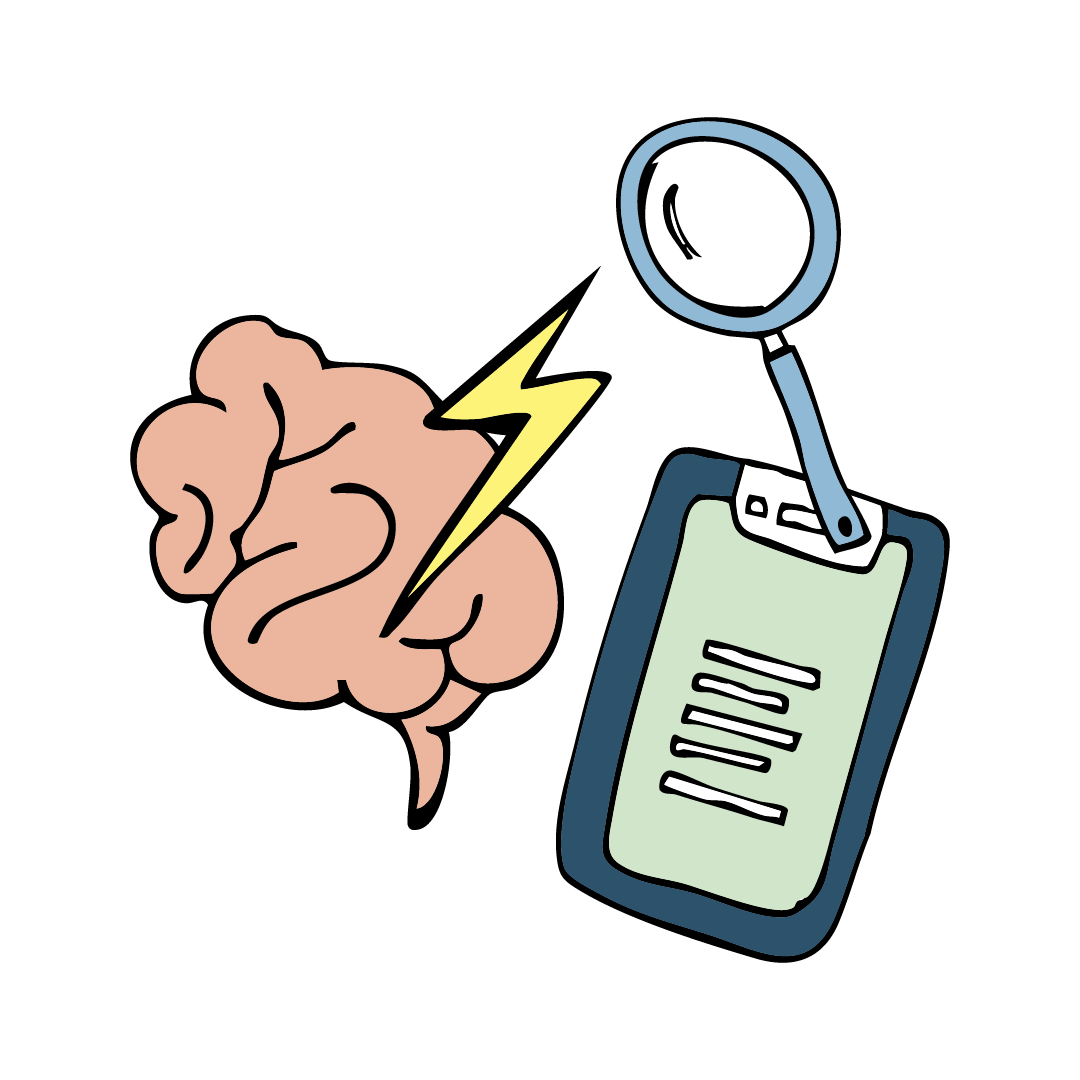
Experiences that are common precursors to pain and sensitize the nervous system:
High levels of stress or major life changes (ex. divorce, job loss, new job, relocation, marriage, birth, death, illness, etc)
Early life adversity or unresolved trauma
An injury or physical trauma (ex. surgery)
Perceived injury or harm
Ongoing patterns of anxiety, depression, or OCD
Unhelpful ways of coping that reinforce fear or avoidance (anxiety, depression)
A chronic sense of unsafety in your environment or relationships
Personality traits common to those with neuroplastic pain and reinforce symptoms:
Perfectionism
People-pleasing
Worrying
Self-criticism
Conscientiousness
Overly responsible
Seeking approval
Neglecting self
Ways of responding to pain and symptoms reinforce the negative feedback loop:
We fear the sensations or symptoms.
We focus on them.
We are constantly checking,
“Is it better or worse?”
We try to fix them with medications, supplements, protocols, treatments, elimination diets, and rely on many providers to manage our health.
We try to figure them out.
Hello, Chat GPT.
We fight our body by avoiding
or pushing through symptoms.
We become frustrated.
And eventually, forlorn.
(The 7F Response by
Dr. Howard Schubiner)⁶
Are my symptoms neuroplastic?
How do I “rule out” a structural cause and “rule in” neuroplastic pain?
Many persistent symptoms are neuroplastic, but not all symptoms are. A thorough medical evaluation is an important first step.
First rule out a fracture, tumor, cancer, or an active infection. If you can be reasonably sure that there is nothing that requires immediate medical attention, read through the “Ruling in Criteria” from the Pain Reprocessing Therapy Center.
Take notice of whether your symptoms fluctuate with stress, exercise, play/vacation, or are impacted by weather, food, people, memories, or if you are otherwise emotionally triggered.
How do I change my brain?
When pain is being maintained by learned brain pathways, the good news is that those pathways can change. Neuroplasticity works both ways.
-
1. Lumley, M. A., Cohen, J. L., Borszcz, G. S., Cano, A., Radcliffe, A. M., Porter, L. S., Schubiner, H., & Keefe, F. J. (2011). Pain and emotion: A biopsychosocial review of recent research. Journal of Clinical Psychology, 67(9), 942–968. https://doi.org/10.1002/jclp.208162.
2. Kross, E., Berman, M. G., Mischel, W., Smith, E. E., & Wager, T. D. (2011). Social rejection shares somatosensory representations with physical pain. Proceedings of the National Academy of Sciences, 108(15), 6270–6275. https://doi.org/10.1073/pnas.1102693108
3. Illustration based on data from: Brinjikji, W., et al. (2015). Systematic literature review of imaging features of spinal degeneration in asymptomatic populations. American Journal of Neuroradiology, 36(4), 811–816. https://doi.org/10.3174/ajnr.A4173
4. Gordon, A., Ziv, A. (2021). The way out: A revolutionary, scientifically proven approach to healing chronic pain. Sony/ATV Music Publishing LLC.
5. Moseley, G. L. (n.d.). Tame the beast: It’s time to rethink persistent pain. Tame the Beast. https://www.tamethebeast.org/tame-the-beast
6. Schubiner, H. (2020). The Unlearn Your Pain workbook (4th ed.). Mind Body Publishing.